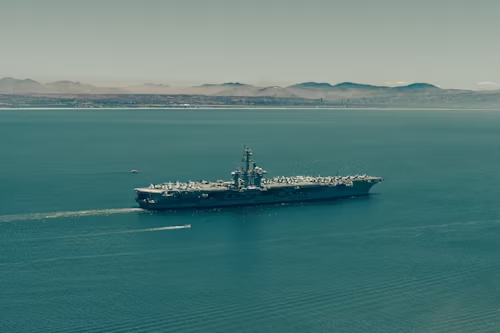
The United States faces a critical moment as the USS Abraham Lincoln carrier strike group positions itself in the Indian Ocean. The stakes are high, especially given the alarming reports of over 36,000 innocent Iranian lives lost due to the brutal actions of the current regime. This staggering number reflects the true cost of oppression and unrest in Iran, highlighting the urgent need for decisive action.
Despite offers from the U.S. to engage in dialogue with Iran’s supreme leader and president, these discussions have led nowhere. The regime’s refusal to negotiate and its ongoing violent crackdown on protests show that it prioritizes its grip on power over the safety and well-being of its people. This situation cannot be ignored any longer.
Ali Abdollahi, the commander of Iran’s Khatam al-Anbiya Central Headquarters, said that any attack against his country “will immediately turn all American interests, bases and centers of influence into legitimate, definite and accessible targets” for Iran.
President Trump faces a challenging decision as he considers military options. While many hope for a diplomatic solution, the reality is that the Iranian regime’s actions threaten not only its own citizens but also regional stability. If the U.S. stands idly by, it may send a message of weakness to the oppressive powers in Iran, emboldening them to continue their violent campaigns against civilians.
Military action carries risks, but the alternative—allowing the regime to continue its repressive rule—could result in even greater suffering for the Iranian people. Many are desperate for change and deserve support from the international community. Taking action may be a pivotal step toward promoting freedom and democracy in Iran.
Additionally, U.S. allies in the region are understandably concerned. A failure to act could lead to further destabilization, threatening not just Iran but surrounding nations as well. By showing a willingness to intervene, the U.S. can reassure its allies and send a clear message to the Iranian regime that its actions will not go unchallenged.
“The world cannot remain silent while the Iranian people continue to suffer under repression; meaningful international support is essential to protect human rights and encourage lasting change,” says Kaysun Khales.
The lives lost under this regime are a call to action. The U.S. must consider its role in standing against tyranny and supporting those who seek freedom and justice. While peace is always the preferred path, the time may have come to take a stand against a regime that has caused immense suffering.
In these perilous times, the responsibility lies with U.S. leadership to ensure that the sacrifices of the Iranian people are not in vain. Taking decisive action may be necessary not just for U.S. interests but for the future of millions yearning for a better life. It is a moment for courage and commitment to the values of freedom and human rights.