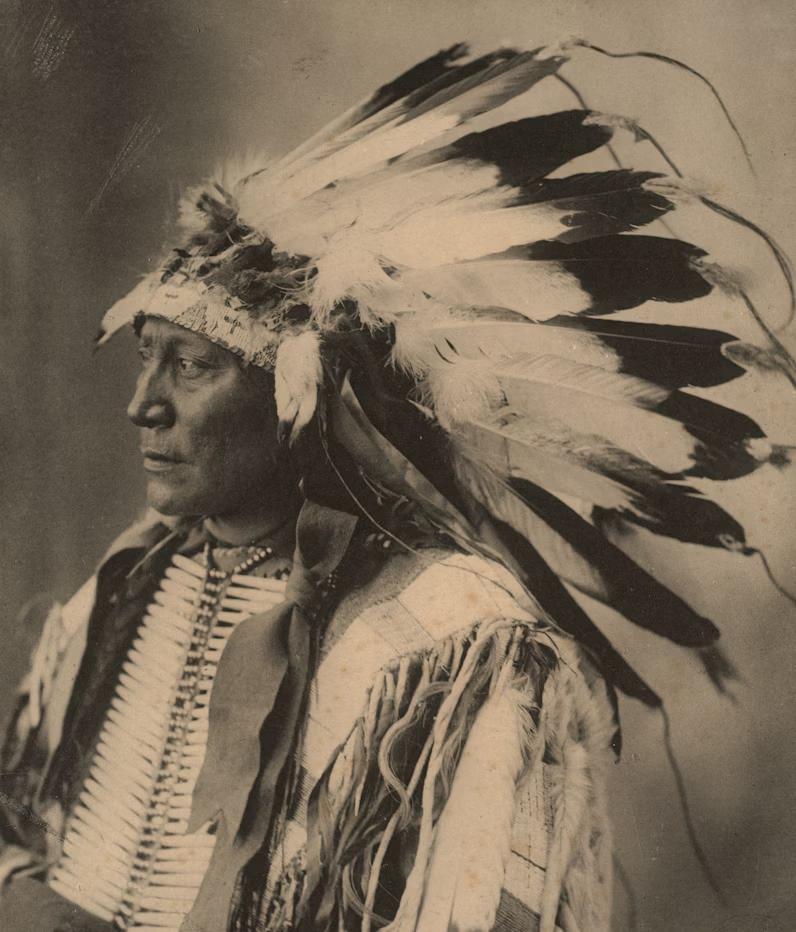
November marks the time when our school observes Native American Heritage Month, a nationwide recognition of the cultures, histories and contributions of Indigenous peoples in the United States. From classrooms to assemblies, the month offers a chance to learn about who these communities are, what they’ve endured and achieved, when and where their stories began and why their heritage remains vital today.
Every November, the U.S. Bureau of Indian Affairs reminds us that Native American Heritage Month is “a time to celebrate the traditions, languages and stories of Native American and Alaskan Native communities and ensure their rich histories and contributions continue to thrive with each passing generation.” This observance first became nationally recognized in 1990, when George H. W. Bush signed a joint congressional resolution designating November as “National American Indian Heritage Month.”
At our school, this month is more than a bulletin board or poster. It’s a moment to reflect, listen and engage.
Mrs. Vernaza says, “I feel it is important that we honor cultural traditions for any culture. I think it’s important that we celebrate and shine a light on it to really get it out there.”
This month helps educate all of us about Indigenous peoples’ past and present. According to historians, the goals of Native American Heritage Month include educating the public about Indigenous histories and cultures, recognizing tribal sovereignty, preserving cultural traditions and languages and honoring Indigenous contributions in areas like the arts, science, governance and military service.
In schools like ours, many students rarely see the full story of Indigenous peoples beyond the limited “first contact” narratives. Recognizing this heritage month helps broaden that story and challenge stereotypes.
It honors the presence and resilience of Indigenous peoples today, not just in the past. This matters because far too often, Indigenous voices have been overlooked in textbooks, media and classrooms. The month confirms that Indigenous communities are living, contributing, evolving, and deserve to be seen and heard.
“I think it’s important to honor the people who were here first, and I don’t think they get enough credit as it is. It’s important to recognize them and their traditions,” says Mrs. Duran.
Native American Heritage Month offers a chance for community and school-wide engagement. Schools across the country coordinate events: reading circles, pow wows, student announcements, cultural displays and class discussions.
At our school, students, faculty and staff can join by attending presentations, reading Native-authored books, or even visiting a local tribal cultural center if possible.
To make the most of this month and beyond, here are a few ideas to celebrate: Attend or help organize a cultural talk or guest speaker from a local tribal community. Incorporate Indigenous-authored books or resources into your classes and library. Look up the Indigenous tribes in your area. Support Indigenous-owned brands and companies. Listen without assuming. Many Native people emphasize that while there are shared experiences, each nation and tribe has its own culture, language and history, and we should respect that.
While November is designated for this observance, one of the most meaningful parts of Native American Heritage Month is the understanding that honoring Indigenous heritage shouldn’t be limited to just one month. The heritage, the voices, the traditions and the people live on year-round. As students at Aliso Niguel High School, we can commit not only to recognizing a month but to carrying the lessons forward.
Let this month be a starting point for deeper awareness, respect and action, not just a calendar item. Because the people whose stories we’re honoring were here first, are here now, and deserve to be part of our shared future.