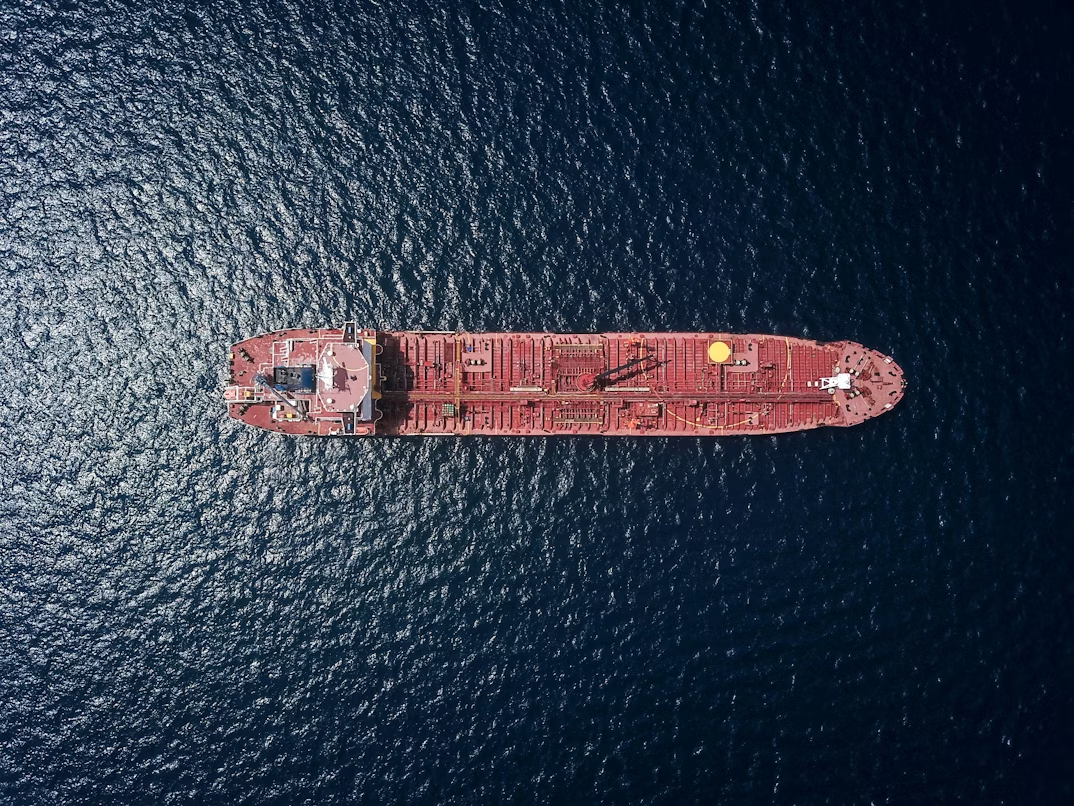
U.S Allies continue to face tension from President Donald Trump as he pressures them to help protect oil ships passing through and secure the Strait of Hormuz.
Leaders from Germany, France, Spain and other allied nations claim to want nothing to do with the war, as they weren’t given advance notice of the war before it was waged by the U.S.
German Chancellor Friedrich Merz says, “We can and will only be able to get involved once the guns fall silent.”
France, as well, is taking a stance against the war, stressing the need to find a diplomatic solution away from a military approach.
France’s Minister of Armed Forces and Veteran Affairs, Catherine Vautrin, says, Paris is “…not participating in this war…there is no question of sending any vessels to the Strait of Hormuz.”
Spain also rejected sending any aid to the strait, with the Defense Minister of Spain, Margarita Robles, saying, “Spain is not considering any mission in Hormuz. What we are considering is the demand that the war end.”
The White House did not consult with the United Nations, Congress, or form a coalition before starting the attack, leading to a lack of coordination with allied leaders not want to intervene.
Additionally, the Allies are unsure what the ultimate goal of this war is, as it has still not been made clear by the White House.
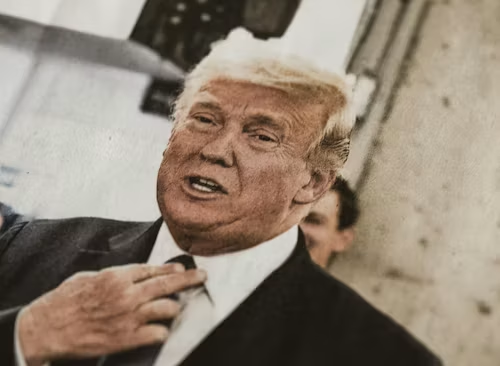
After facing rejection from allies, Trump says, “My attitude is, we don’t need anybody. We’re the strongest nation in the world. We have the strongest military by far in the world. We don’t need them, but it’s interesting. I’m almost doing it, in some cases, not because we need them, but because I want to find out how they react.”
After days of desperate begging, Trump now claims not even need help from allies, and they would never have helped in the first place.
Twenty percent of the world’s oil passes through the Strait of Hormuz. So, with it closed, oil prices have increased to more than $110 a barrel, and rising gas prices worldwide.
This has put a lot of pressure on President Trump; without allied support, he has to reopen the strait on his own, which is critical to ending the war. Without having consulted the allies before striking Iran, he is put in a difficult situation, having put the allies on the defensive.
Lacking allied support, Trump has resorted to making an ultimatum with Iran, saying on a post on Truth Social that “if the Hormuz Strait is not immediately ‘Open for Business,’’’ then the U.S will “completely obliterat[e] all of [Iran’s] Electric Generating Plants, Oil Wells and Kharg Island…which we have purposefully not yet ‘touched.’”
By threatening to bomb Iran’s civilian infrastructure through this wild ultimatum, Trump proves that he does not have a clear or reasonable solution for ending the war with Iran.
In response to the threat, Iran attacked a fully-laden Kuwaiti oil tanker, resulting in zero known casualties.
As the war enters its 5 week, many people remain uncertain where this war is going to go, with hopes of a diplomatic and peaceful solution.
Since the war was caused by the U.S acting according to its own accord without consulting its allies beforehand, it is completely understandable and justifiable in their choice not to get involved in the Strait of Hormuz. They don’t want the war to erupt into a global or more widespread conflict, instead calling for an end to the fighting.